
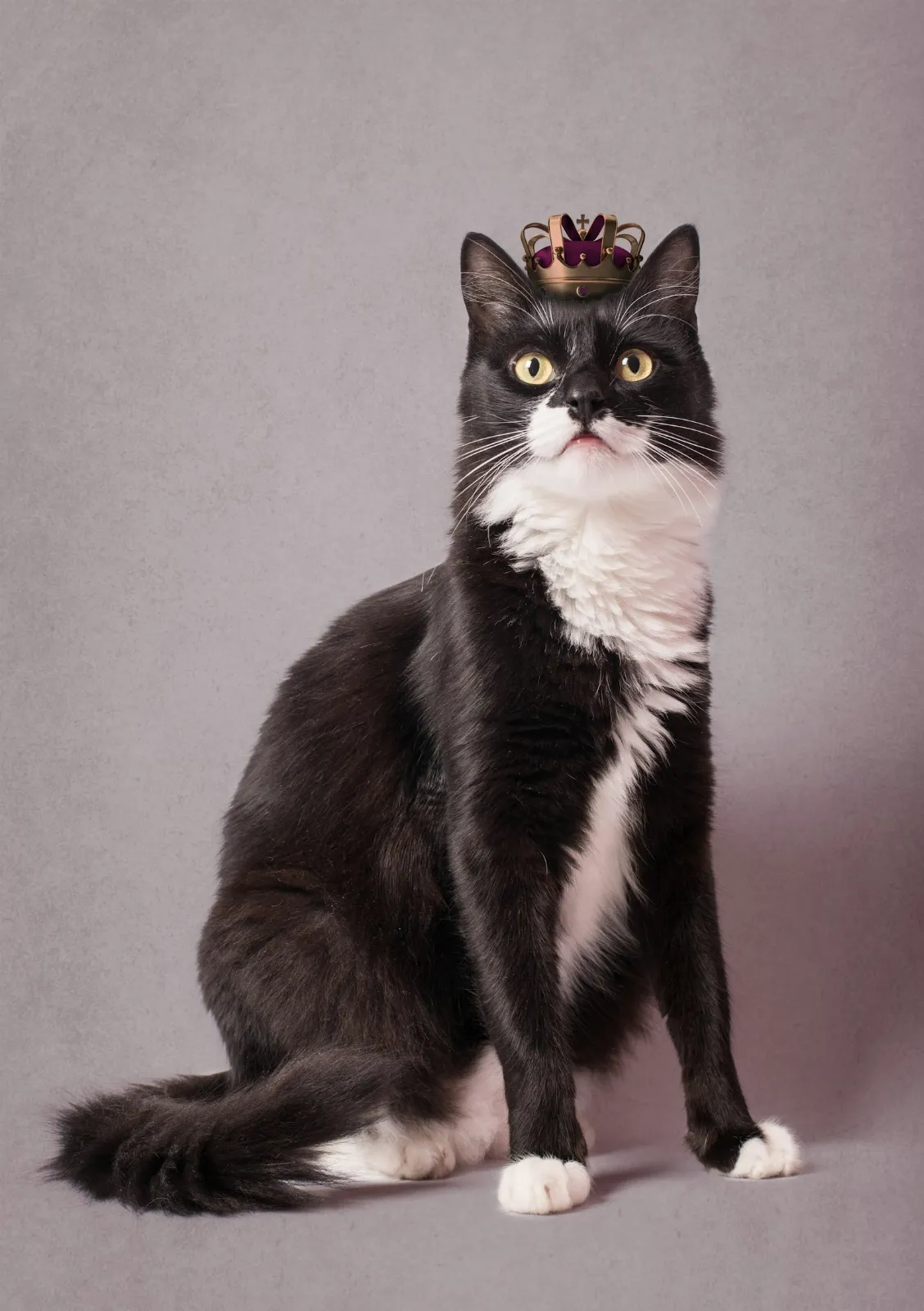
Few cats come with as many stories attached as the black-and-white "tuxedo." Friends swear their tuxedo is a genius. Others insist these cats are always boys, or that they belong to a special breed. It is fun folklore, but some of it can shape the wrong expectations when you bring a cat home.
In this guide, we sort common tuxedo cat myths from the facts. You will learn what is actually true about these cats, which traits owners really notice, and the simple care basics that matter far more than coat color.
Why Tuxedo Cat Myths Are So Common
Tuxedo cats are easy to spot and easy to remember. Their bold markings make them stand out in photos, cartoons, and shelters, so stories stick to them. Add a few famous tuxedo pets and some classic black-cat superstitions, and you get a pattern full of legends.
Most tuxedo cat myths come from one small mistake: treating a coat pattern as if it were a breed or a personality type. Once you know that the tuxedo look is simply a color pattern, many myths fall apart on their own.
The Most Common Tuxedo Cat Myths (and the Facts)
Myth 1: Tuxedo Cats Are a Breed
Fact: The tuxedo look is a bicolor coat pattern. It appears in mixed-breed cats and in many recognized breeds, such as the British Shorthair, Maine Coon, and Persian. There is no "tuxedo breed" with its own standard.
Myth 2: All Tuxedo Cats Are Male
Fact: This mix-up probably comes from calico and tortoiseshell cats, which are almost always female. The black-and-white pattern is not linked to sex, so tuxedo cats can be male or female.
Myth 3: Tuxedo Cats Are Smarter Than Other Cats
Fact: There is no evidence that coat color affects intelligence. Some tuxedo cats open doors and solve puzzle feeders quickly, but so do many tabby, ginger, and grey cats. Clever behavior comes from the individual cat, its experiences, and how much enrichment it gets.
Myth 4: Every Tuxedo Cat Has the Same Personality
Fact: Temperament varies widely. One tuxedo cat may be a loud, social lap cat, while another is quiet and independent. Early socialization, genetics, health, and home life matter far more than markings.
Myth 5: Tuxedo Cats Are Rare
Fact: Black-and-white cats are common. You will find plenty of them in shelters and rescues, often waiting for homes. That is good news if you love the look.
Myth 6: Black-and-White Cats Bring Bad Luck
Fact: Superstitions about dark-colored cats have no basis in reality. Sadly, some shelters notice that darker cats can be overlooked. A cat's color says nothing about the joy it can bring to your home.
[Internal Link Suggestion: are tuxedo cats different → what makes black-and-white cats special]
Real Traits of Tuxedo Cats
Once the tuxedo cat myths are cleared away, some real and interesting facts remain.
The Coat Comes From the White Spotting Gene
The white areas form because the white spotting gene stops pigment cells from reaching certain parts of a developing kitten's body. That is why the white usually appears on the chest, belly, paws, and face.
Markings Are One of a Kind
No two tuxedo cats look exactly alike. Common features include:
- A white "shirt front" or bib on the chest
- White "socks" or "mittens" on the paws
- A white chin, mustache, or blaze on the face
- Sometimes a white tail tip
Traits Owners Commonly Report
Many owners describe their tuxedo cats as curious, social, and vocal. These are real observations about real cats, but they are not guaranteed by the pattern. Think of them as possibilities, not promises.
The best way to know a cat's personality is to spend time with that cat, not to judge it by its coat.
[Internal Link Suggestion: tuxedo cat personality → tuxedo cat personality traits and what to expect]
Care Basics for Tuxedo Cats
A tuxedo cat needs the same good care as any other cat. The pattern does not change what your cat eats, how it plays, or how often it should see a vet.
Everyday Care Checklist
Here is a simple checklist to start with. Print it, stick it on the fridge, and share it with everyone in the household so care stays consistent.
- Balanced diet: Feed a complete cat food suited to your cat's age, and measure portions to avoid weight gain.
- Fresh water: Keep clean water available at all times. A wide bowl or fountain can encourage drinking.
- Daily play: Two or three short play sessions help burn energy and prevent boredom.
- Clean litter trays: Scoop daily and offer one tray per cat, plus one extra.
- Grooming: Brush short coats weekly and long coats more often. Trim nails every few weeks.
- Routine vet visits: Yearly checkups for adults and twice-yearly visits for seniors.
Skin and Coat Care
Brushing is also a chance to check your cat from nose to tail. Feel for lumps, look at the skin under the fur, and check that the coat looks glossy rather than dull or greasy. A sudden change in coat condition can hint at diet or health problems.
Sun Protection for White Areas
Pale skin under white fur, especially on the ears and nose, can burn in strong sun. Limit outdoor time in the brightest part of the day and watch for redness or crusting.
How to Spot a Myth When You Hear One
New tuxedo cat myths pop up on social media all the time. A few quick questions help you judge any claim:
- Does it treat a color as a breed? If so, it is probably wrong.
- Is it based on one cat or many? A single funny story is not a pattern.
- Does it promise a personality? No coat can guarantee temperament.
- Is there a trustworthy source? Vets, shelters, and cat welfare groups are good places to check.
If you are adopting, ask shelter staff about the individual cat instead. They can tell you how it reacts to handling, noise, and other pets, which is far more useful than any legend about its coat.
Common Mistakes New Owners Make
- Choosing a cat based only on its coat instead of its temperament
- Trusting tuxedo cat myths about intelligence and assuming a "smart" cat needs less play
- Skipping regular checkups because the cat seems fine
- Free-feeding without tracking weight
Believing tuxedo cat myths can set up the wrong expectations. Meet the cat in front of you, and let its personality surprise you.
When to See a Vet
Call your vet if your cat:
- Stops eating or drinking normally
- Strains in the litter tray or urinates outside it
- Has sudden behavior changes, such as hiding or aggression
- Shows sores, scabs, or redness on white ears or nose that do not heal
- Loses or gains weight without a clear reason
Conclusion
Most tuxedo cat myths grow from one simple misunderstanding: treating a beautiful coat pattern as a breed or a personality. The truth is more interesting. These cats come in many shapes, sizes, and temperaments, and each one is an individual. Give yours good food, play, grooming, and regular vet care, and you will get to know the real cat behind the suit. Find more practical advice in our cat care guides.
[Internal Link Suggestion: tuxedo cat care for beginners → tuxedo cat guide for beginners]
Sources
- Bicolor cat (Wikipedia): white spotting genetics and the tuxedo pattern.