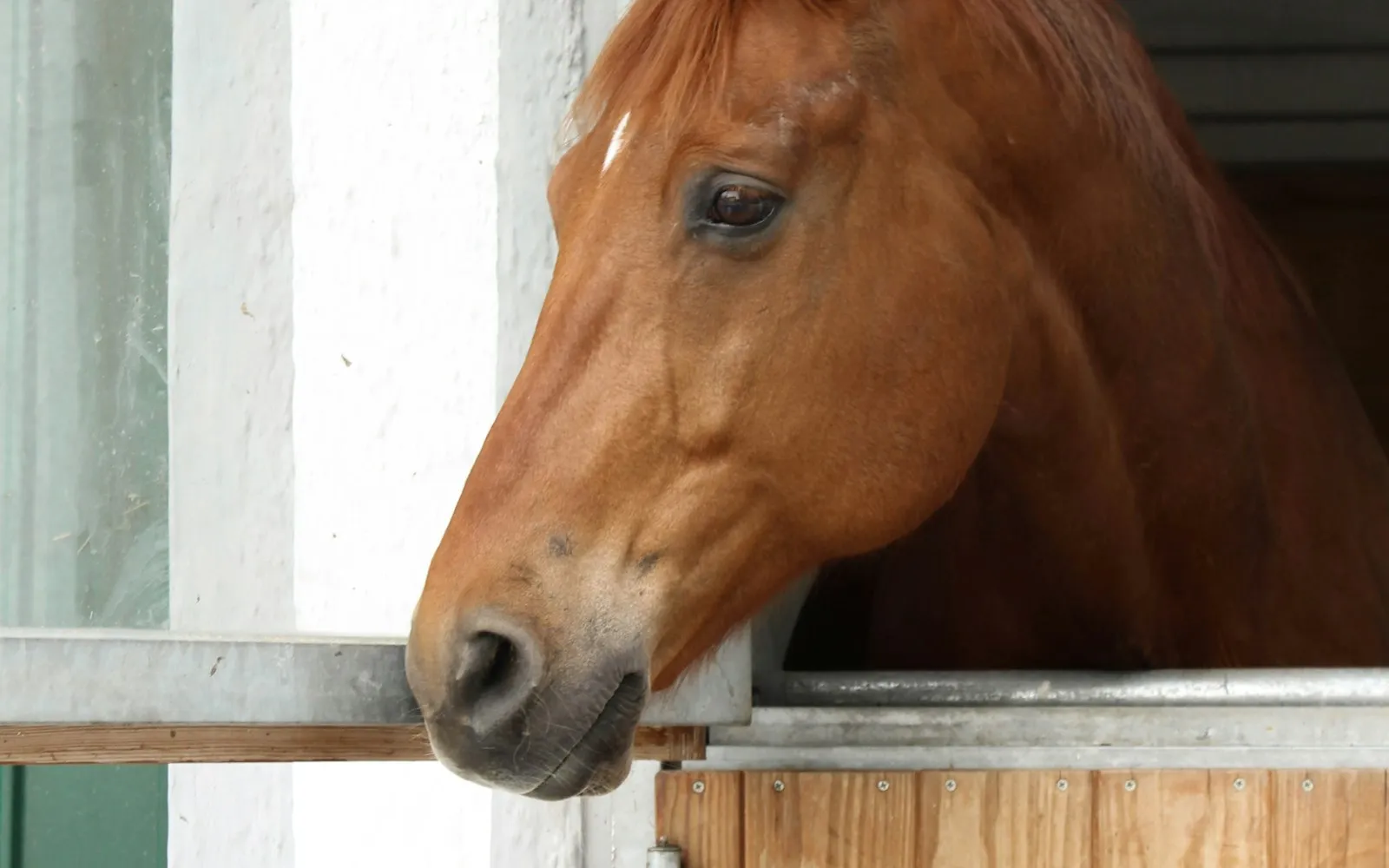
Horses are creatures of habit. They feel safest when meals, turnout, and handling happen at roughly the same times each day. A steady routine also makes it much easier for you to notice when something is off.
This guide breaks daily horse care into a simple morning, midday, and evening checklist. You will also learn the normal vital signs to know and how a short daily log can protect your horse's health.
Why a Routine Matters
A horse's digestive system works best with small, frequent meals and regular movement. Sudden changes in feeding times or turnout can upset the gut and raise stress.
The best daily horse care routine is one you can repeat every day, even on busy or rainy days.
Morning Routine
Mornings set the tone. Start every visit by looking before you do anything else.
The 60-Second Health Check
Before feeding, stand back and watch your horse for a minute. Ask yourself:
- Is my horse alert and interested in food?
- Is weight spread evenly on all four legs?
- Are the eyes clear and the nostrils free of thick discharge?
- Are there any new cuts, swellings, or signs of rolling?
- Is there a normal amount of manure, and does it look normal?
This quick look is the heart of good daily horse care. It often catches colic, injury, or illness early.
Water First
Check that buckets or troughs are full and clean. The University of Minnesota Extension notes that most 1,000-pound (454 kg) horses drink about 10–12 gallons (38–45 liters) a day, and more when working in heat.
In winter, break or prevent ice. In summer, scrub buckets often to stop algae.
Morning Feeding
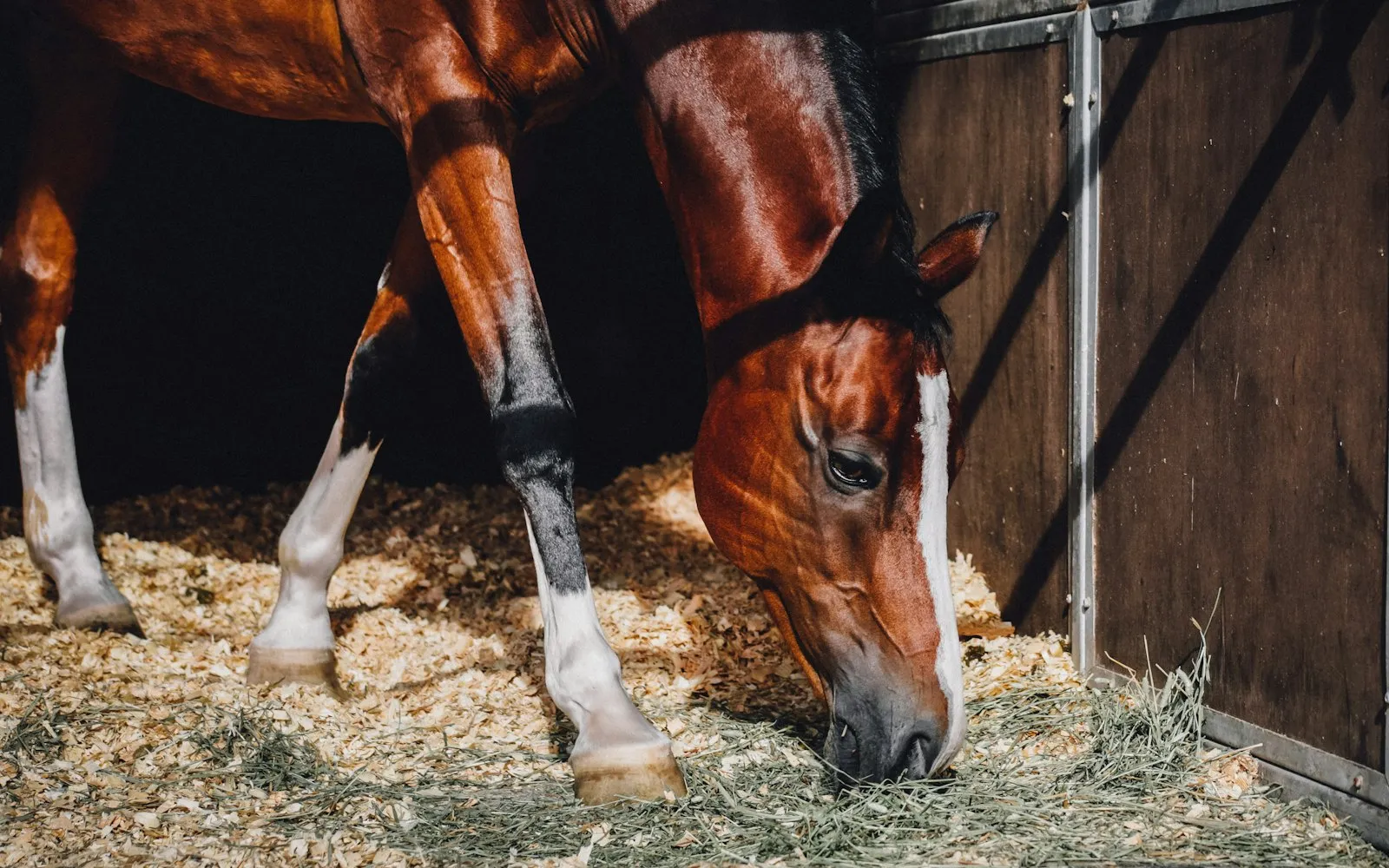
Offer hay first, then any concentrate your vet or nutritionist recommends. Forage should be the main part of the diet. Weigh hay and feed rather than guessing by the flake or scoop.
[Internal Link Suggestion: how much hay and grain to give → horse feeding guide for beginners]
Mucking Out
While your horse eats or goes out, clean the stall. Remove manure and wet bedding, then add fresh bedding as needed. A clean, dry stall helps protect hooves and lungs.
- Take out manure piles with a fork.
- Lift out wet spots down to the floor.
- Bank clean bedding to the sides to dry.
- Level the bed and top up if needed.
Midday Routine
Midday is often when horses are out, being ridden, or resting. It is a good time for grooming and exercise.
Turnout
Turnout lets horses move, graze, and socialize. Check the fencing, gates, and water in the paddock before turning out. Look for anything sharp or broken.
Grooming and Picking Hooves
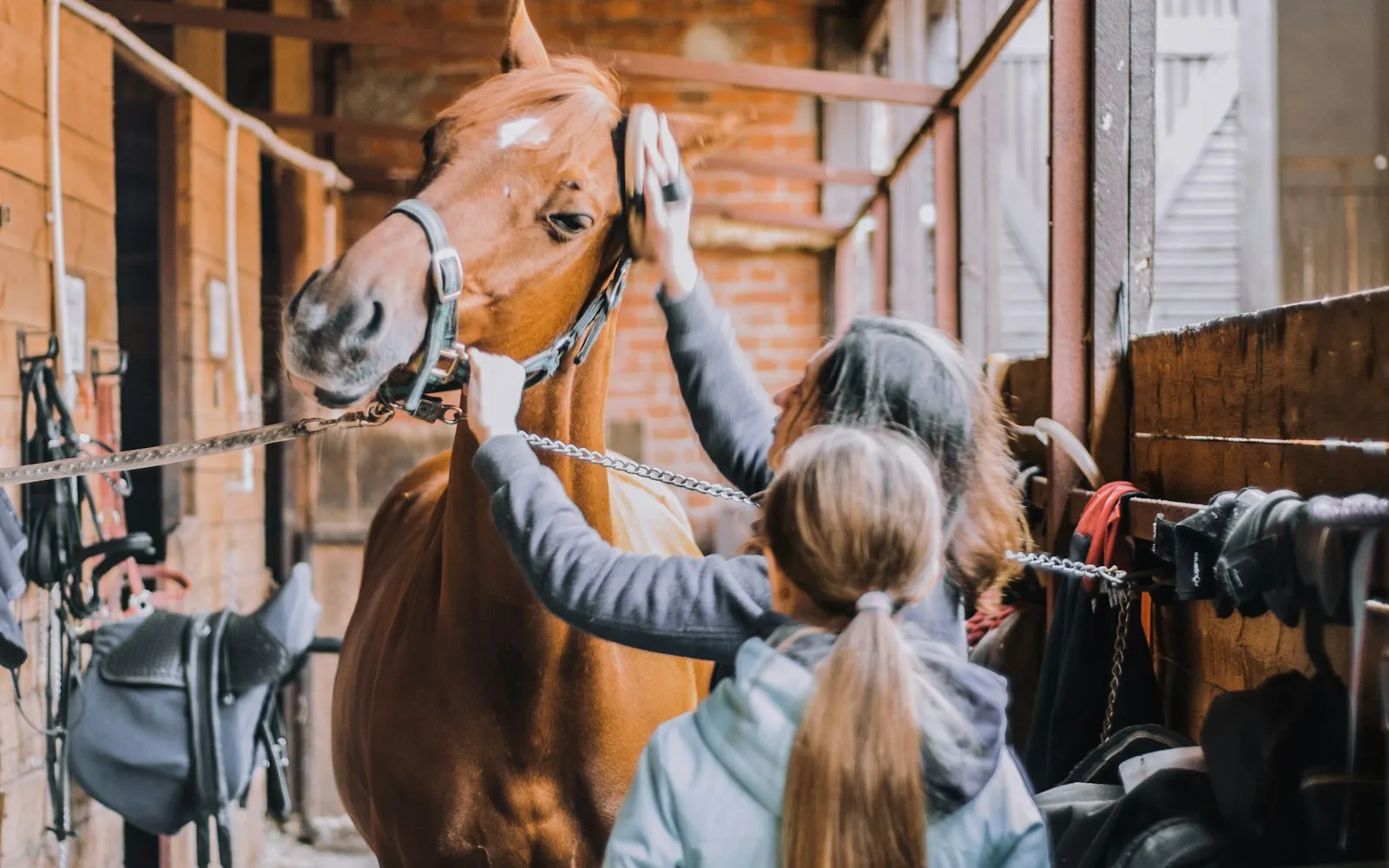
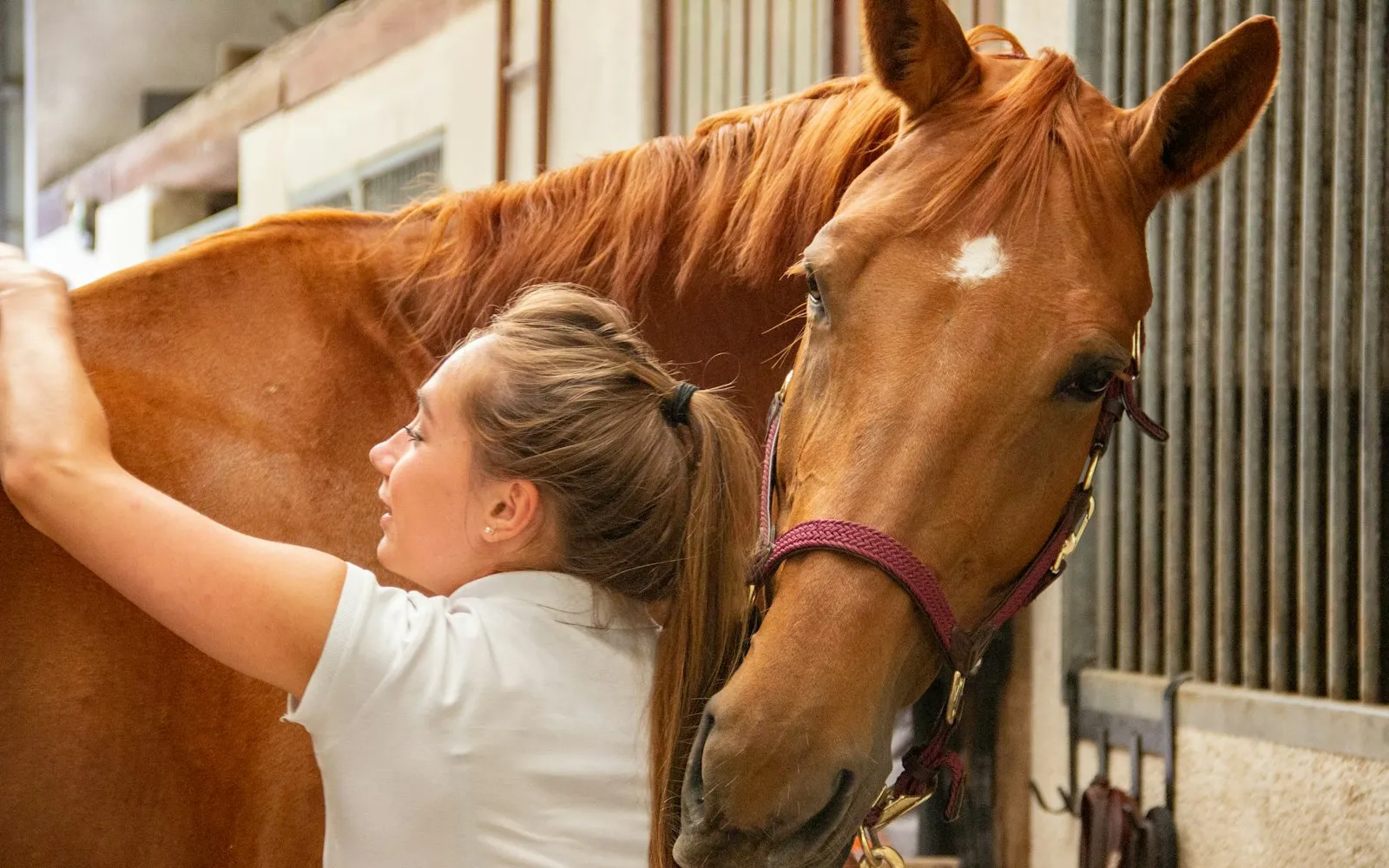
Grooming is more than making your horse look nice. It is your hands-on health check and a key part of daily horse care.
- Use a curry comb in circles to lift dirt.
- Follow with a stiff brush, then a soft brush on the face and legs.
- Comb the mane and tail gently.
- Run your hands down each leg to feel for heat or swelling.
How to Pick Hooves Safely
Stand beside the leg, facing the tail, and ask your horse to lift the foot. Clean from heel to toe with a hoof pick, avoiding the sensitive frog. Check for stones, a bad smell, or loose shoes.
Rule of thumb: pick out the hooves at least once a day, and every time before and after riding.
Exercise
Riding, lunging, or hand-walking keeps your horse fit and calm. Warm up at the walk for several minutes before asking for more work, and cool down until breathing returns to normal.
Cooling down is an easy step to skip, but it is an important part of daily horse care after hard work.
Evening Routine
The evening check is your last look before the night. Do not rush it.
- Repeat the quick health check from the morning.
- Top up and clean water.
- Give the evening hay so your horse has forage overnight.
- Pick out stall manure and check the bedding.
- Close gates and latch stall doors securely.
Rug and Blanket Checks
If your horse wears a blanket, check it twice a day. Make sure it fits well, is not slipping, and is not rubbing the shoulders or withers.
Slide your hand under the blanket to check your horse is not sweating or chilled. Adjust the weight of the blanket as the weather changes.
[Internal Link Suggestion: skin rubs and other warning signs → common horse health problems and warning signs]
Normal Vital Signs to Know
Knowing your horse's normal numbers helps you judge whether a problem is serious. Penn State Extension lists these normal ranges for an adult horse at rest:
- Temperature: 99–101.5°F (37.2–38.6°C)
- Heart rate: 28–44 beats per minute
- Breathing rate: 10–24 breaths per minute
- Capillary refill: color returns to pressed gums in 1–2 seconds
- Gums: moist, pink, and shiny
Take your horse's vitals a few times when it is calm and healthy, and write down the results. Every horse has its own normal.
Adjusting for Weather
The same checklist changes a little with the seasons. Smart daily horse care means watching the forecast as closely as the feed bin.
Hot Days
Ride in the cooler morning or evening hours, offer shade, and check water more often. Watch for heavy sweating, fast breathing, or dullness, which can signal heat stress.
Cold and Wet Days
Extra hay helps horses stay warm, because digesting forage produces body heat. Keep water from freezing, and check that wet horses have shelter from wind and rain.
Staying Safe Around Your Horse
Wear sturdy boots, tie your horse with a quick-release knot, and never stand directly behind it. Speak calmly as you approach so your horse always knows where you are. These small habits make every barn chore safer.
Keep a Daily Log
A simple notebook or phone note can make daily horse care much easier to track. Write down:
- Feed and hay amounts
- How much water was drunk, if you can tell
- Manure amount and appearance
- Exercise done and how your horse felt
- Anything unusual, even small changes
Over time, the log shows patterns. It also gives your vet or farrier useful details when you call. If several people share daily horse care at your barn, a shared log keeps everyone on the same page.
[Internal Link Suggestion: the bigger picture of care → horse care basics every new owner should know]
When to See a Vet
Your daily horse care routine is your early-warning system. Call your veterinarian if you notice:
- Pawing, rolling, sweating, or looking at the belly
- No manure, or much less than usual
- A temperature above 101.5°F (38.6°C) at rest
- Refusing food or water
- Sudden lameness or a hot, painful foot
- Feed coming from the nose, squinting, or a deep wound
Keep your vet's number posted in the barn, and call before giving any medication. Your vet can tell you what to do while you wait.
Final Thoughts
Good daily horse care is simple, but it has to be steady. Look first, keep water fresh, feed plenty of forage, keep the stall clean, groom and pick hooves, and write things down. For more practical tips, visit our horse care guides.